Your Team Meeting Should End With Decisions, Not Just Updates
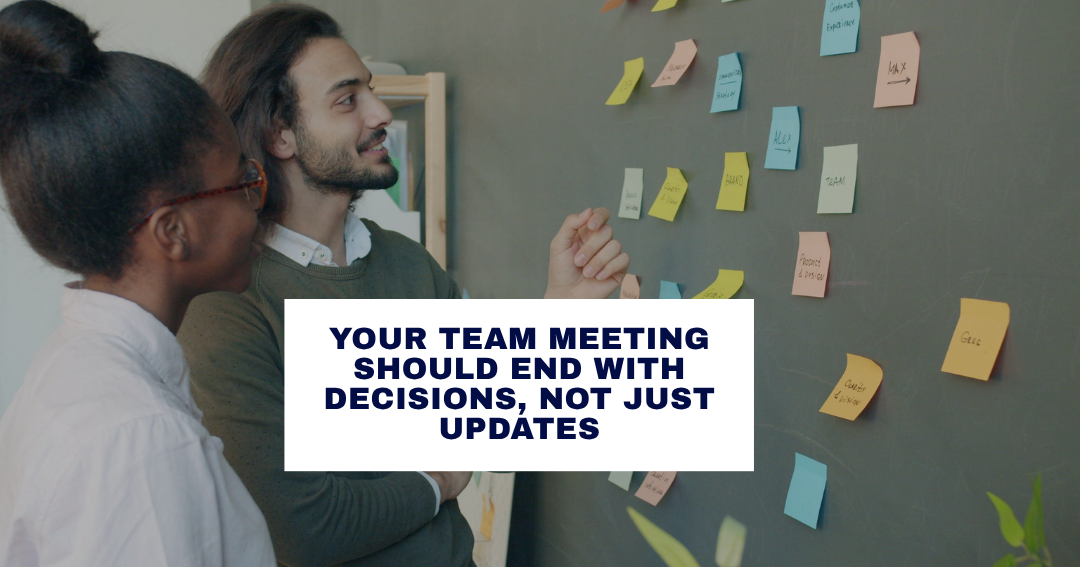
It’s Monday morning. The team gathers, and everyone takes a turn: pipeline numbers, closings this week, who’s waiting on what. Someone mentions the file that got delayed again. Everyone agrees it’s a problem. Forty-five minutes later, the meeting ends.
Next Monday, the same file comes up.
For producers who also lead a team, that pattern is expensive. A meeting should do more than keep everyone informed. It should help people make decisions, clarify who owns what, and fix problems before they reach clients or production.
Start With What Needs a Decision
Not every update needs a meeting. Pipeline reports, appointment schedules, and status changes can usually be shared in advance, leaving the time together for the issues that actually need attention.
A transaction keeps getting delayed because responsibilities aren’t clear. Communication between team members is breaking down. A client-service task keeps falling through the cracks. Those are the conversations worth having in the room.
For each one, the meeting should settle three things: what needs to happen, who is responsible, and when the team will see progress.
Make Accountability Part of the Process
The hardest part for a growing team isn’t agreeing on what to do. It’s making sure it gets done.
A team member agrees to handle an issue, everyone moves on, and a week later the same problem is back. Sometimes the responsibility was never clear. Sometimes nobody followed up.
A simple process breaks that cycle. Assign each commitment to one person, write it down, and open the next meeting by reviewing what’s still outstanding. Team members leave knowing exactly what they own, and leaders have a reliable way to confirm the work is getting done.
That’s not micromanagement. It’s setting clear expectations and addressing missed commitments.
Leading a Team Is a Different Skill
Being an excellent loan officer or real estate agent doesn’t automatically prepare you to manage people, delegate well, or run a productive meeting. As the business grows, those skills matter as much as production itself.
Through CORE Coaching, team leaders work with experienced coaches on delegation, clear ownership, and the routines that keep work moving without the owner making every decision.
Try It at Your Next Meeting
As the year winds down, make one change. Send updates ahead of time. Build the agenda around the decisions that need to be made. End with every commitment assigned to a name and a date.
Then see how many of last week’s problems are still on the list.
Want help building that rhythm with your team? Book a strategy call with The CORE.
share this
Related Articles
Related Articles