The Market Changed. Did You?

There are loan officers and real estate agents still preparing for the market to go back to the way it was. Rates improve. Transaction volume picks up. Buyers come off the sidelines. Business gets easier. Maybe some of that happens. But even if it does, the customer coming back into the market will not be the same customer who was buying five or ten years ago.
That is the opportunity serious producers should be preparing for now. The point is not to predict rates or chase every new platform. It is to understand how the path to trust, information, and decision-making has changed, then build a business that can compete inside that reality.
The First Meeting Starts Before You Are in the Room
Consumers no longer need a real estate agent or loan officer to begin researching a purchase. They can browse homes, compare neighborhoods, read reviews, watch videos, explore financing scenarios, follow professionals on social media, and increasingly use AI tools to answer questions before they ever make contact. That does not make the professional less valuable. It changes where the professional has to create value.
By the time someone calls, they may already have formed an opinion about you. They have seen your website, your reviews, your social presence, perhaps your videos, and almost certainly some of your competitors. The old question was how to make a great first impression. The new question is what impression you are making before you even know the prospect exists.
Information Is Cheap. Judgment Is Not.
The industry used to have an information advantage. Today, consumers can find an enormous amount on their own. What they cannot easily get is judgment: which option makes sense for them, what matters in this transaction, where the risk sits, what deserves attention, and what is simply noise.
AI can explain a mortgage contingency. It cannot sit across the table from a nervous buyer, understand the full situation, weigh tradeoffs, and take responsibility for helping that client make a sound decision. The same is true on the lending side. Technology can deliver information faster. It still takes expertise to interpret it, structure the right solution, manage complexity, and execute when the answer is not obvious.
The best producers will use technology aggressively without allowing technology to turn their service into a commodity. They will also recognize that consumers have been trained by nearly every other industry to expect speed. Strong systems make it possible to respond faster and communicate better without requiring the producer to live on the phone. The goal is not to work at digital speed personally. The goal is to build a business capable of delivering a modern client experience consistently.
The Fundamentals Did Not Go Away
A changing market does not mean abandoning the basics and chasing every new platform. Relationships, prospecting, service, follow-up, referral partners, database discipline, and accountability still matter. What keeps changing is the delivery system around those fundamentals.
Serious producers need to out-prospect, out-serve, and out-follow-up the market. They also need to understand where consumers are looking, how trust is being built, and how the buying process is changing. Adaptation is not about replacing the fundamentals. It is about executing them in the world that exists now.
That is the kind of work The CORE is built around. CORE Coaching gives serious producers the structure, accountability, and outside perspective to make those changes in the business, not just talk about them. The CORE Locker Room gives agents and loan officers another way to stay close to current strategies, live training, and what other growth-minded producers are doing right now.
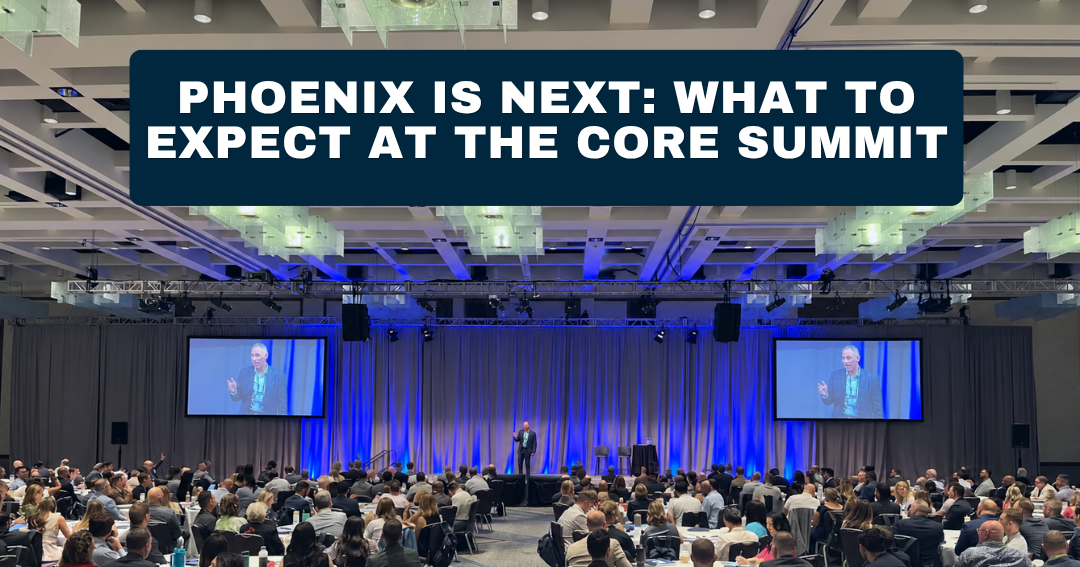
And for qualifying producers who need time away from the daily grind to work on the business itself, The CORE Summit creates space to focus on the systems, decisions, and execution that shape what comes next. This year’s Summit takes place in Phoenix, November 11–13. Interested? Talk to a coach to see if you qualify.
The next market does not have to look like the last one for you to win in it. But you do have to build for the market that is coming instead of the one you remember.
share this
Related Articles
Related Articles